
Let me be blunt — I’ve been around this industry long enough to recognize when desperation spirals into an unsalvageable tragedy. What unfolded this past weekend was no accident
Let me be blunt — I’ve been around this industry long enough to recognize when desperation spirals into an unsalvageable tragedy. What unfolded this past weekend was no accident.”
Jon Stewart didn’t merely address the audience; he commanded the room. Standing before friends, colleagues, and members of the press, his voice trembled with grief and restrained fury as he spoke about the devastating loss of his lifelong friends, Rob and Michele Reiner. The room fell silent immediately, the weight of his words hanging heavily in the air. Stewart’s presence, combining his hallmark wit with raw emotional honesty, made the moment feel both intimate and profoundly public.
Do not insult my intelligence by calling this ‘fate’ or attempting to skirt the truth,” Stewart continued, his eyes scanning the crowd with intensity. “Rob and Michele were not safe in their own home. They faced trials that no parent should ever endure. We all know the long, agonizing battle they fought alongside their son, Nick Reiner. Those parents did everything to save their child, but in the end, that very sacrifice led to the most heartbreaking conclusion.”
The audience, initially tense with anticipation, now sat in stunned silence. Stewart’s words cut through the Hollywood gloss and tabloid narratives like a sharp blade. He was not merely recounting a tragedy — he was holding a mirror up to the industry and society, forcing a confrontation with the uncomfortable truth behind what many were attempting to frame as an isolated or sensationalized incident.
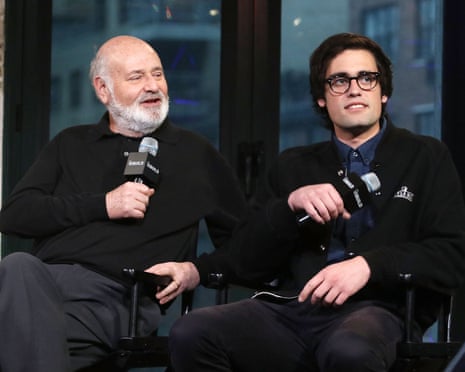
“I see how the media is dancing around the hard questions,”Stewart said, his voice lowering yet retaining a commanding presence. “You talk about the struggle? You talk about addiction? You talk about the mental health of the survivor? But what about Rob and Michele’s pain? Who will weep for the people who dedicated their entire lives to healing a family, only to receive this ultimate devastation in return?”
His words resonated deeply, not only because of the gravity of the tragedy but also because Stewart anchored the discussion in empathy and moral clarity. In a world often obsessed with celebrity, soundbites, and fleeting narratives, he reminded everyone that the human toll of such tragedies cannot be reduced to headlines. Rob and Michele were more than victims in a story—they were individuals, parents, and caretakers whose lives embodied love, sacrifice, and resilience.

Stewart’s delivery was deliberate, each pause measured, allowing the weight of his observations to settle over the room. He lowered his voice further, ensuring that every word landed with gravity and nuance, challenging listeners to confront their own assumptions about tragedy, accountability, and empathy.
“We cannot keep romanticizing family tragedies into sympathetic narratives simply because they involve celebrities,” Stewart stated firmly. “I am not standing here to judge, but to protect the dignity of my friends. They deserve to be remembered as magnificent parents who loved until their very last breath — not merely as victims of a tragic circumstance.”
The sentiment struck a chord with everyone present. Stewart’s framing challenged the audience to rethink how they consume stories of loss and tragedy, especially those amplified by media sensationalism. He emphasized that true compassion involves acknowledging the depth of human suffering and resisting the temptation to simplify complex, painful realities into digestible narratives.
He concluded with a statement that carried both personal resolve and universal resonance: