
A Halftime Show Just Challenged the Super Bowl — and It’s Not Backing Down
The Super Bowl has always owned one sacred block of time: halftime. For decades, that window has belonged to the NFL alone, a cultural monopoly defined by billion-dollar production, global pop stars, and corporate sponsors lining up for history. This year, that certainty just cracked.
Erika Kirk has officially unveiled the “All-American Halftime Show,” and its timing is what detonated the internet. According to early reports, the event is planned to air during the exact Super Bowl halftime window — not before kickoff, not after the trophy presentation, but directly against the most watched broadcast moment in American television.
No sidestepping. No compromise. A straight-on challenge.
A Direct Face-Off With the Biggest Night on TV
What makes this different isn’t just ambition — it’s intention. Insiders say the All-American Halftime Show is designed as a simultaneous alternative, offering viewers a choice at the very moment the NFL expects total attention. In broadcast terms, that’s unheard of.
Even more striking is what the show isn’t doing.
There’s no billion-dollar pop spectacle.
No headline-chasing collaborations.
No familiar corporate sponsors plastered across every frame.
Instead, the project is being framed as message-first programming — a deliberate pivot toward tradition, identity, and values that supporters say have been missing from halftime for years.
That framing alone has split audiences in real time.
The Artist Claim That Changed the Conversation’

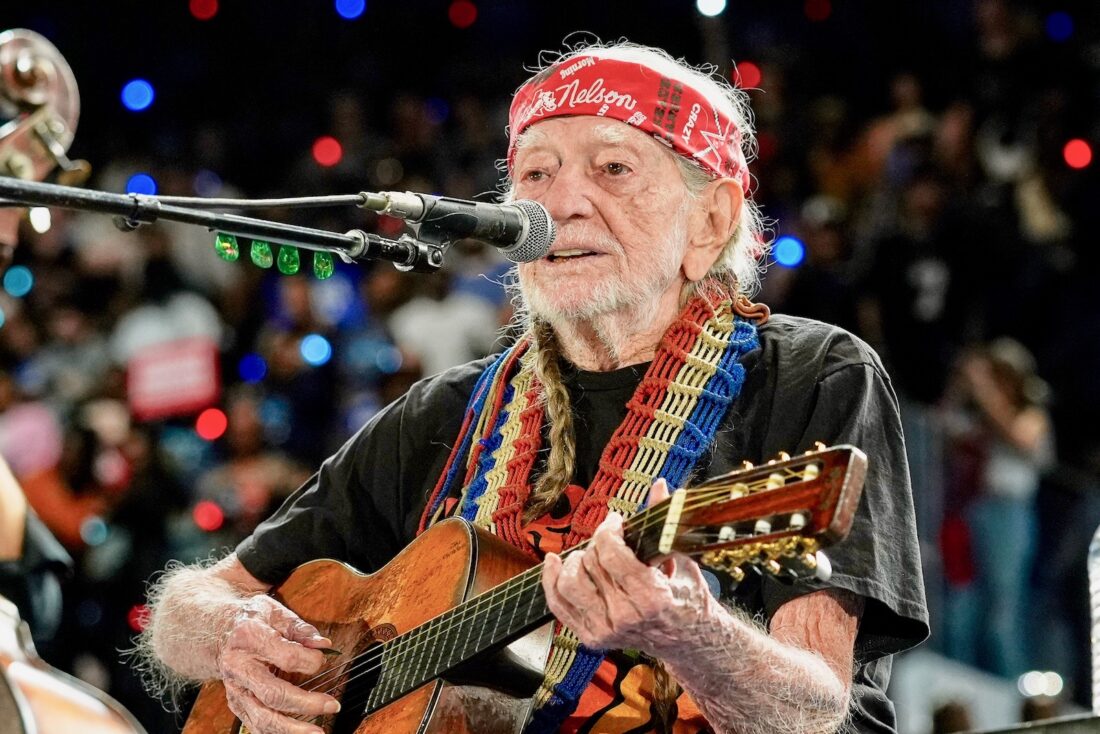
Early reporting suggests 32 legendary country and rock artists are lined up for the broadcast. No official list has been released, but the scale of that number is what turned whispers into headlines. This isn’t a cameo. It’s not a novelty act.
It’s being positioned as a full-scale alternative event.
If accurate, the logistics alone make this one of the boldest programming decisions in modern television: coordinating dozens of legacy performers, running live, and competing directly with the NFL’s most protected time slot.
Broadcast veterans are calling it unprecedented.
Executives are calling it dangerous.
Supporters are calling it overdue.
Why This Isn’t Just About Music
The debate around the All-American Halftime Show isn’t really about genre. It’s about control.
For years, halftime has evolved into a globalized pop showcase — polished, algorithm-friendly, and designed to trend worldwide within minutes. Kirk’s project appears to reject that model entirely.
No virality play.
No youth-market targeting.
No global branding push.
Instead, it’s being marketed as a cultural alternative — something for viewers who feel halftime stopped reflecting them long ago.’

That’s why reactions have been so intense.
Supporters argue the NFL has ignored a massive audience segment, and that this show simply gives them an option. Critics counter that challenging the Super Bowl halftime isn’t innovation — it’s provocation.
Both sides may be right.
The Risk No One Can Ignore
Insiders are already calling this the riskiest halftime decision in modern TV history, and the reasons are obvious.
The Super Bowl halftime isn’t just entertainment — it’s leverage. Networks sell ads years in advance based on guaranteed attention. Any fragmentation, even minor, disrupts a carefully engineered ecosystem.
If a meaningful portion of viewers switches channels, streams, or platforms during halftime, it could change how broadcasters value that window forever.
That’s why networks have been unusually quiet.

No official pushback.
No public statements.
No dismissals.
Silence, in this case, speaks volumes.
Social Media Picks Sides in Real Time
Online, the reaction has been immediate and polarized.
Some are celebrating what they see as a long-awaited cultural correction — a reminder that halftime doesn’t have to chase trends to matter. Others accuse the project of deliberately inflaming division by forcing a symbolic choice on America’s biggest night.
And that’s the key detail driving engagement: choice.
For the first time in decades, viewers may actively decide what halftime represents to them — spectacle or statement, global pop or cultural roots, familiarity or disruption.
That decision point is exactly why this story is exploding across platforms.
How This Ends Is the Real Question
At this stage, the most important detail isn’t whether the All-American Halftime Show will air. Early reports suggest it will.
:max_bytes(150000):strip_icc():focal(756x233:758x235)/Willie-Nelson-122223-2-887236f1bdfc4d82906a1f615405673b.jpg)
The real question is what happens after.
Does it siphon meaningful viewership?
Does it fade into a niche moment?
Or does it permanently fracture a broadcast tradition everyone assumed was untouchable?
Industry analysts are watching closely, because the outcome could ripple far beyond one night. If simultaneous counter-programming proves viable during the Super Bowl, no broadcast window is truly safe anymore.
A Cultural Line Has Been Draw
Whether praised or criticized, Erika Kirk’s All-American Halftime Show has already accomplished one thing: it forced a conversation no one in television wanted to have.
Who owns cultural moments?
Who decides what “everyone” watches?
And what happens when viewers are finally given a real alternative?
This isn’t just a halftime show.

It’s a stress test.
And as Super Bowl night approaches, the internet isn’t asking if this will matter anymore.
It’s asking how far the shockwaves will travel once both broadcasts go live — at the exact same time.
And it’s precisely in that moment that everything will be measured not by total viewership, but by meaning.
If only 5–10% of the Super Bowl audience leaves the main broadcast to seek out an alternative, that alone would be a seismic number.
Not because it defeats the NFL, but because it proves something modern television has long tried to avoid: audiences are no longer a single, uniform mass. They have memories, identities, and limits to how much repetition they’re willing to accept year after year.
The All-American Halftime Show may not win on scale. But it’s playing a different game — the game of representation.
For viewers who have felt sidelined by mainstream cultural storytelling, the very existence of this show already feels like a symbolic victory.

On the other hand, even if the project fails, it still leaves behind a dangerous precedent for media giants: dominance is no longer guaranteed. That with enough boldness and enough faith in a specific audience, even television’s most “untouchable” time slots can be challenged.
That’s why this upcoming Super Bowl night isn’t just about football or music.
It’s a moment when America looks back at itself — and asks whether a shared cultural center still exists, or whether choice itself has become the final point of connection.