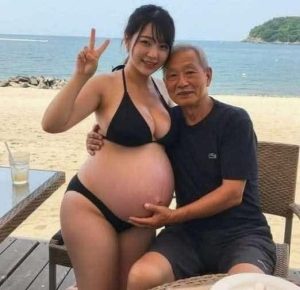
The sad girl marries a 70-year-old 10 days later she found!
When Yuki sent out her wedding announcement, she did not expect applause.
She expected noise—and that was exactly what she got. Her message landed in her friends’ group chat: casual, direct, almost understated. She was twenty-six, she wrote, and in ten days she would marry a seventy-year-old man named Kenji. The replies poured in instantly:…
Yuki had long passed the stage where approval mattered. Years of optimizing her life for others’ expectations—career milestones, relationship timelines, curated happiness—had left her exhausted. Her life looked stable on paper, but inside it felt hollow. She had just left a draining corporate job, only to discover her ex was dating her former boss. The betrayal felt both personal and symbolic, as if her carefully constructed adult life had quietly collapsed.
She fled to Okinawa without a plan, seeking silence, salt air, and distance. On a quiet stretch of beach, far from luxury resorts and influencer hotspots, she met Kenji. Sitting under a palm tree with sandals half-buried in the sand, reading a worn paperback, he noticed her unraveling and offered a cold lemonade without asking a single question. That small gesture cracked something open.
Kenji did not interrogate her about the future, productivity, or five-year plans. He did not treat her pain as a problem to be fixed. He listened. He shared stories from a life fully lived—including mistakes. He laughed easily and carried a calm that comes only from surviving enough disappointment to stop fearing it. In a world obsessed with hustle, branding, and instant gratification, his presence felt radical.
A retired physics professor, Kenji lived simply. Contrary to assumptions, his wealth was not dramatic—no hidden fortune, no real estate empire. What he had was time, emotional intelligence, and an unshakable sense of self. He gardened, grilled fish, shared sharp humor and memes, and spoke honestly without manipulation. He had no social media and no interest in online validation.
For Yuki, that honesty was magnetic. He wanted nothing from her except her presence. He did not compete, control, or mold her. He treated her as an equal, not a project or a prize. In modern relationship terms, he offered emotional safety, secure attachment, and radical acceptance—rare experiences she had longed for but rarely found.
Their connection grew quietly. No dramatic proposal, no viral TikTok moment, no curated photoshoot. They talked, cooked, and walked. He remembered details others dismissed and asked about her literal dreams—the half-forgotten images upon waking. He listened without judgment to her fear, doubt, and ambition. When anxiety struck, he did not rush her; he slowed the world around her.