
What Changes in Your Tongue May Say About Your Overall Well-Being
For many older adults, the morning begins with familiar rituals. You wake up, wash your face, perhaps take a few moments to stretch, and then glance in the mirror.
Most days, nothing seems out of the ordinary. But sometimes, something small catches your attention. The tongue looks different. Instead of its usual pink tone, it appears coated in white.
At first, this change often feels unimportant. Many people assume it is caused by dry indoor air, sleeping with the mouth open, or something they ate the night before.
Others believe it will disappear on its own and give it little thought. In many cases, these assumptions are understandable. A white tongue is often harmless and temporary.
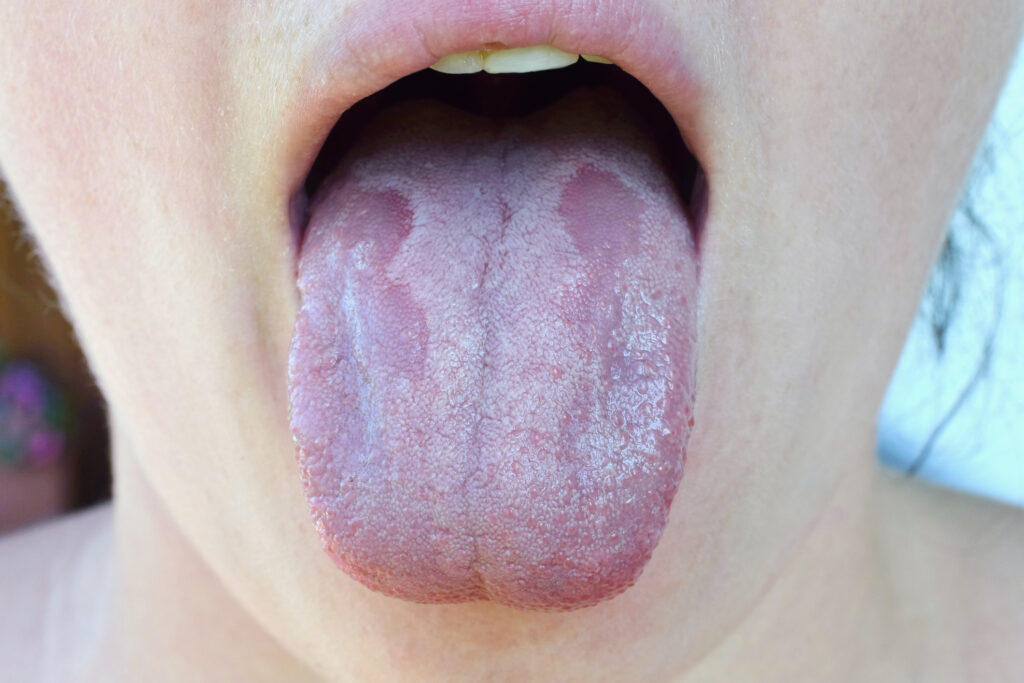
However, for adults over the age of 60, physical changes deserve a bit more attention. As the body ages, it becomes more sensitive to small imbalances, and subtle signs can carry useful information.
The tongue, in particular, is one of the body’s most responsive indicators of internal health. Changes in its color, texture, or coating can reflect hydration levels, oral hygiene, immune balance, medication effects, and daily habits.
A white tongue is rarely dangerous by itself. Still, it is often the body’s quiet way of signaling that something needs adjustment. Understanding what this change may mean allows older adults to respond early, protect comfort, and support overall well-being.
What a Healthy Tongue Normally Looks Like
A healthy tongue is usually pink, slightly moist, and evenly textured. It may have a thin, transparent coating, which is normal and helps protect the surface. It should not appear thickly coated, painful, or patchy.
When the tongue becomes white, pale, or heavily coated, it suggests that something has shifted. In many situations, the cause is simple and reversible. In other cases, it may point to an underlying issue that deserves attention. Learning how to recognize these differences empowers seniors to care for their health with confidence rather than concern.
Why Tongue Changes Matter More With Age
As people grow older, natural changes occur throughout the body. Saliva production often decreases, which affects the mouth’s ability to clean itself.
The immune system may respond more slowly to imbalances, and the number of daily medications often increases. Each of these factors can influence oral health.
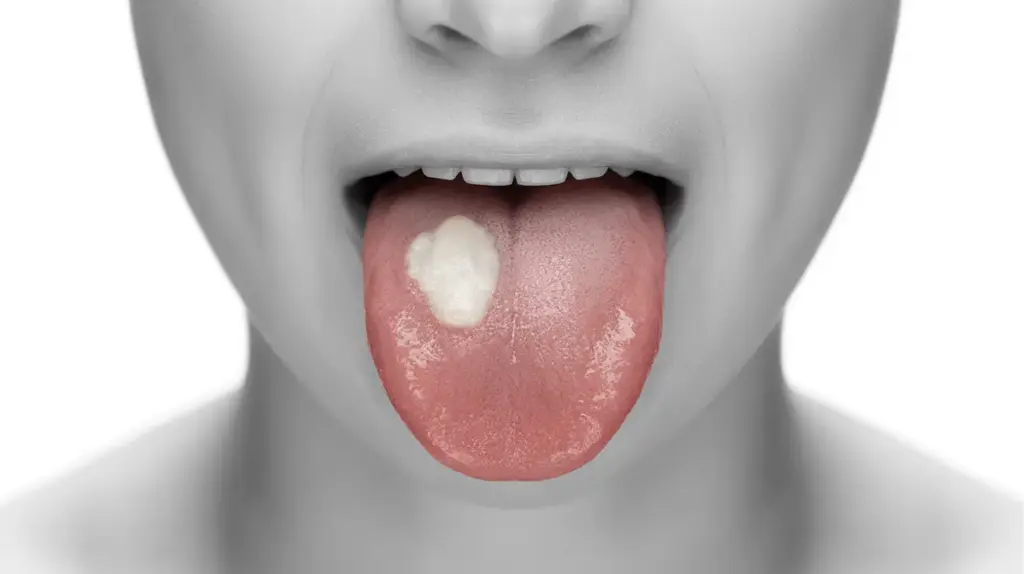
Because of these age-related changes, the tongue may show signs of stress earlier than other parts of the body.
A white coating can be an early indicator of dehydration, dry mouth, reduced oral care, nutritional imbalance, or infection. Addressing these issues early often prevents discomfort and reduces the risk of complications later.
It is important to remember that not every white tongue signals illness. Many causes are mild and temporary. The key is observing whether the change persists, worsens, or appears alongside other symptoms such as soreness, dryness, or difficulty swallowing.
Poor Oral Hygiene: A Common and Often Overlooked Cause
One of the most frequent reasons for a white tongue is something many people do not think about regularly: tongue cleaning.
Most people are diligent about brushing their teeth, but the tongue is often forgotten. This matters because the surface of the tongue is not smooth. It contains thousands of tiny structures called papillae.
These create small grooves and spaces where food particles, bacteria, and dead cells can easily collect.
Over time, this buildup forms a visible white or off-white coating, especially toward the back of the tongue. When saliva production is reduced, the accumulation becomes even more noticeable.
For older adults, maintaining oral hygiene can be more challenging than it once was. Dentures, sensitive gums, reduced hand strength, arthritis, or limited mobility can make brushing and flossing more difficult.
Some people also avoid cleaning the tongue because of a sensitive gag reflex.
Saliva normally plays an essential role in oral health. It washes away debris, neutralizes acids, and helps control bacterial growth. When saliva decreases due to age or medications, the mouth loses this natural defense. As a result, residue builds up more quickly, and the tongue may appear white.
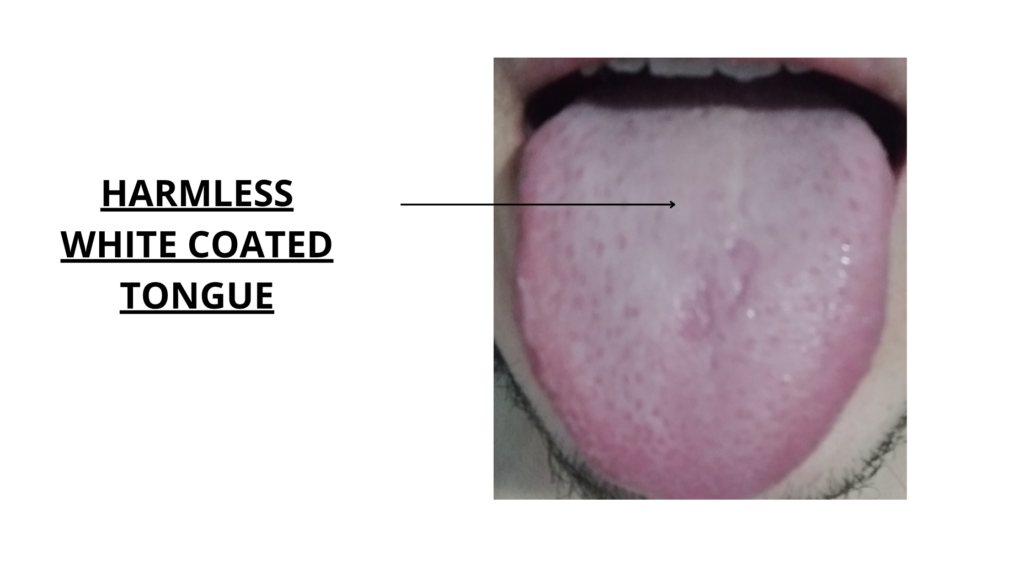
Improving daily oral care often brings quick results. Gently brushing the tongue with a soft toothbrush or using a tongue scraper can remove buildup without irritation.